


Sickle Cell Disease is a group of inherited red blood cell disorders. Normal red blood cells are round like doughnuts, and they move through small blood tubes in the body to deliver oxygen. Sickle red blood cells become hard, sticky and shaped like sickles used to cut wheat. When these hard and pointed red cells go through the small blood tube, they clog the flow and break apart. This can cause pain, damage and a low blood count, or anemia.
There is a substance in the red cell called hemoglobin that carries oxygen inside the cell. One little change in this substance causes the hemoglobin to form long rods in the red cell when it gives away oxygen. These rigid rods change the red cell into a sickle shape instead of the round shape:
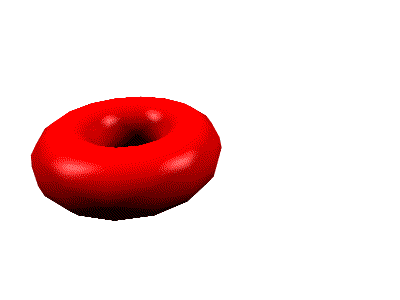 Normal cell Normal cell |  Sickle cell |
You inherit the abnormal hemoglobin from your parents, who may be carriers with sickle cell trait or parents with sickle cell disease. You can not catch it. You are born with the sickle cell hemoglobin and it is present for life. If you inherit only one sickle gene, you have sickle cell trait. If you inherit two sickle cell genes you have sickle cell disease.
Sickle cell is in many nationalities including African Americans, Africans, Arabs, Greeks, Italians, Latin Americans, and those from India. You can be Caucasian and have sickle cell disease or trait. All races should be screened for this hemoglobin at birth.
A simple blood test called the hemoglobin electrophoresis can be done by your doctor or local sickle cell foundation. This test will tell if you are a carrier of the sickle cell trait or if you have the disease.
Most States now perform the sickle cell test babies are born. The simple blood test will detect sickle cell disease or sickle cell trait . Other types of traits that may be discovered include:
Hemoglobin C trait
Hemoglobin E trait
Hemoglobin Barts – which indicates an alpha thalassemia trait
Beta thalassemia trait
Sickle cell trait is a person who carries one sickle hemoglobin producing gene inherited from their parents and one normal hemoglobin gene. Normal hemoglobin is called type A. Sickle hemoglobin called S. Sickle cell trait is the presence of hemoglobin AS on the hemoglobin electrophoresis. This will NOT cause sickle cell disease. Other hemoglobin traits common in the United States are AC and AE traits.
There are three common types of sickle cell disease in the United States.
Each of these can cause sickle pain episodes and complications, but some are more common than others. All of these may also have an increase in fetal hemoglobin which can protect the red cell from sickling and help prevent complications. The medication hydroxyurea also increases fetal hemoglobin.
Complications from the sickle cells blocking blood flow and early breaking apart include:
Sickle cell patient should be under the care of a medical team that understands sickle cell disease. All newborn babies detected with sickle cell disease should be placed on daily penicillin to prevent serious infections. All of the childhood immunizations should be given plus the pneumococcal vaccine. Parents should know how to check for a fever because this signals the need for a quick medical checkup for serious infection. The following are general guidelines to keep the sickle cell patient healthy:
Patients and families should watch for the following conditions that need an urgent medical evaluation: