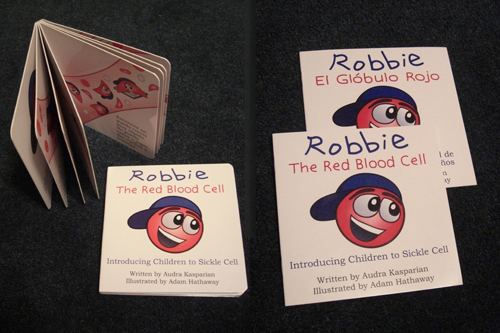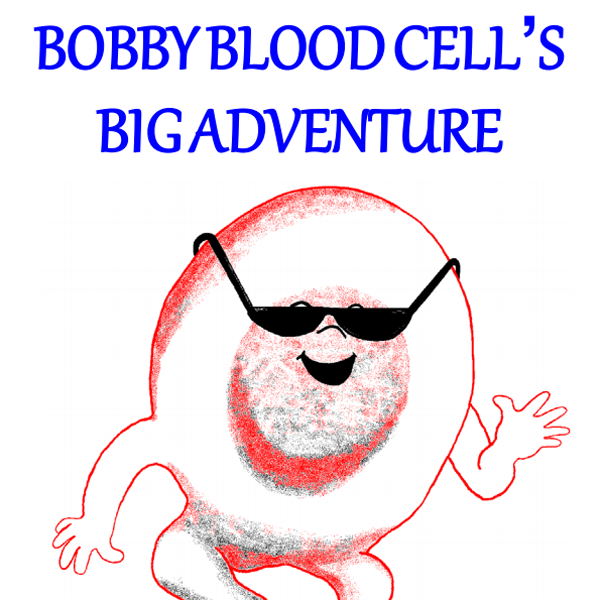
Educational Coloring Book for Children: The Bear Necessities of Sickle Cell
Coloring is a popular pastime that both children and adults enjoy. It has recently become more popular for adults because of the calming effect of



Coloring is a popular pastime that both children and adults enjoy. It has recently become more popular for adults because of the calming effect of
Download this page in PDF format: Qualifying for Medical Benefits If you or your child has sickle cell anemia, you may be eligible for financial assistance.
CHECK’s mission is to improve the coordination of health care for children and young adults with chronic conditions by engaging and collaborating with them, their families, and their communities to provide tailored disease specific programs and to reduce their barriers to accessing medical, behavioral, and social services. CHECK provides modules on youth and parent sickle cell education. CHECK was developed for the Centers for Medicare and Medicaid Innovations CHECK project, copyright University of Illinois Board of Trustees. Read more…
Usually, red blood cells (RBCs) are shaped like round discs. People who have sickle cell disease, though, have RBCs that are shaped like sickles, or crescent moons. This defect can cause painful episodes, serious infections, chronic anemia, and damage to body organs.
Read more at KidsHealth
Sickle cell disease is a blood disorder that’s inherited — meaning it’s passed down from parents to their children. Babies are born with sickle cell disease when they inherit two abnormal genes (one from each parent). These genes cause the body’s red blood cells to change shape.
Read more at KidsHealth
Have you ever seen a sickle? It’s a farm tool with a curved, sharp edge for cutting wheat. Sickle cell anemia (say: uh-NEE-mee-uh) is a disease of the blood. It gets its name because a person’s red blood cells are shaped like sickles, or crescent moons, instead of their usual round, disc shape.
Read more at KidsHealth
This guide will assist programs in developing and establishing a transition program from pediatric to adult care for youth with chronic medical conditions.
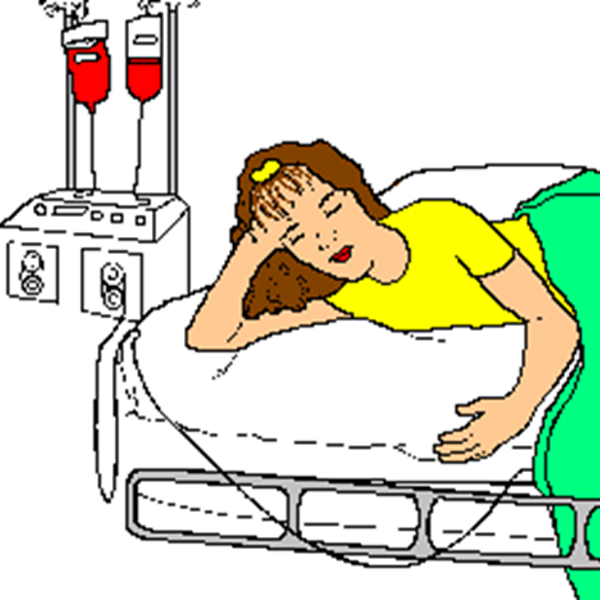
By Donna Dent and Beatrice Gee, MD
From The Virginia Sickle Cell Awareness Program
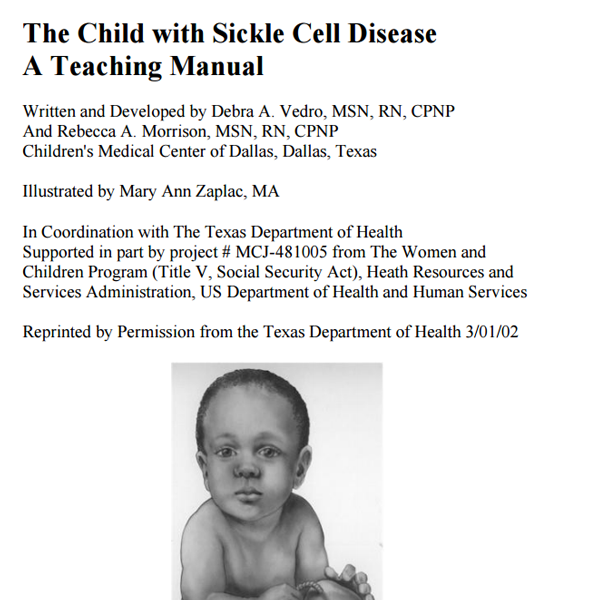
Written and Developed by Debra A. Vedro, MSN, RN, CPNP And Rebecca A. Morrison, MSN, RN, CPNP at the Children’s Medical Center of Dallas, Dallas, Texas.